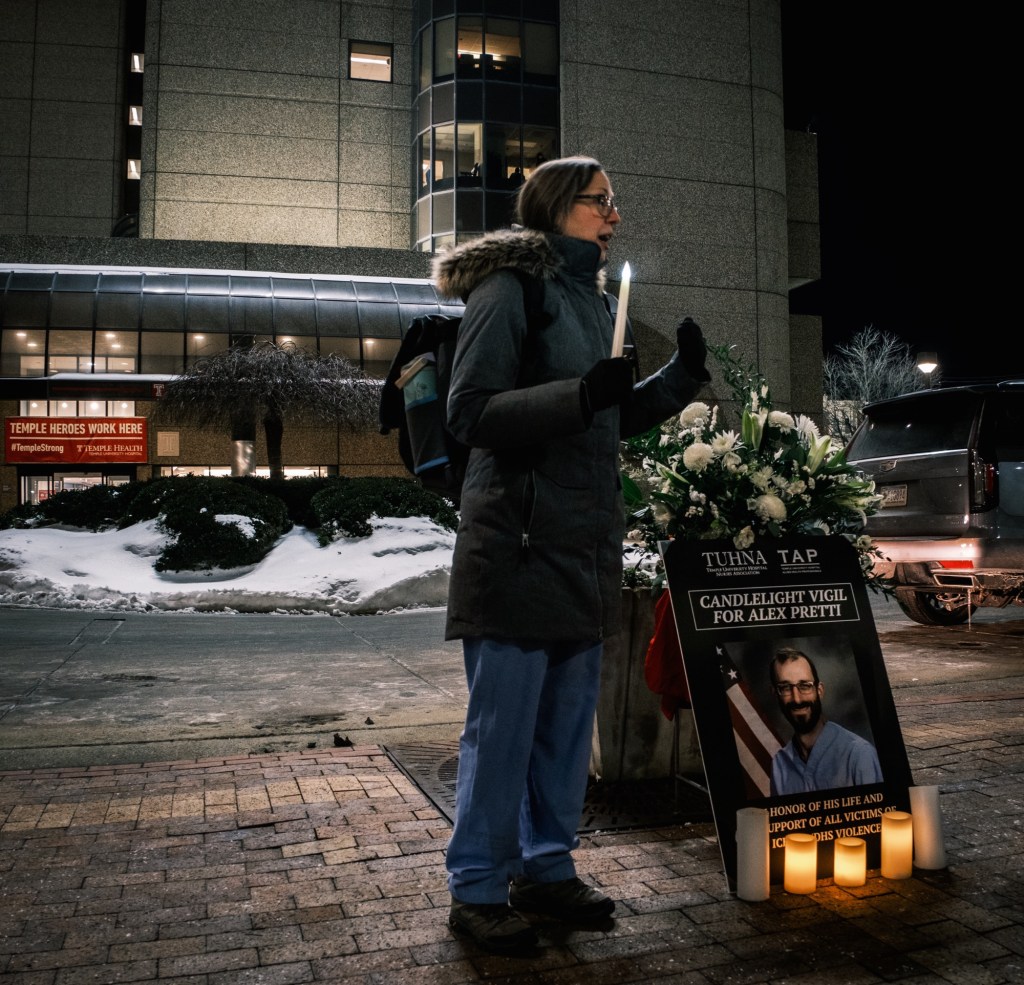
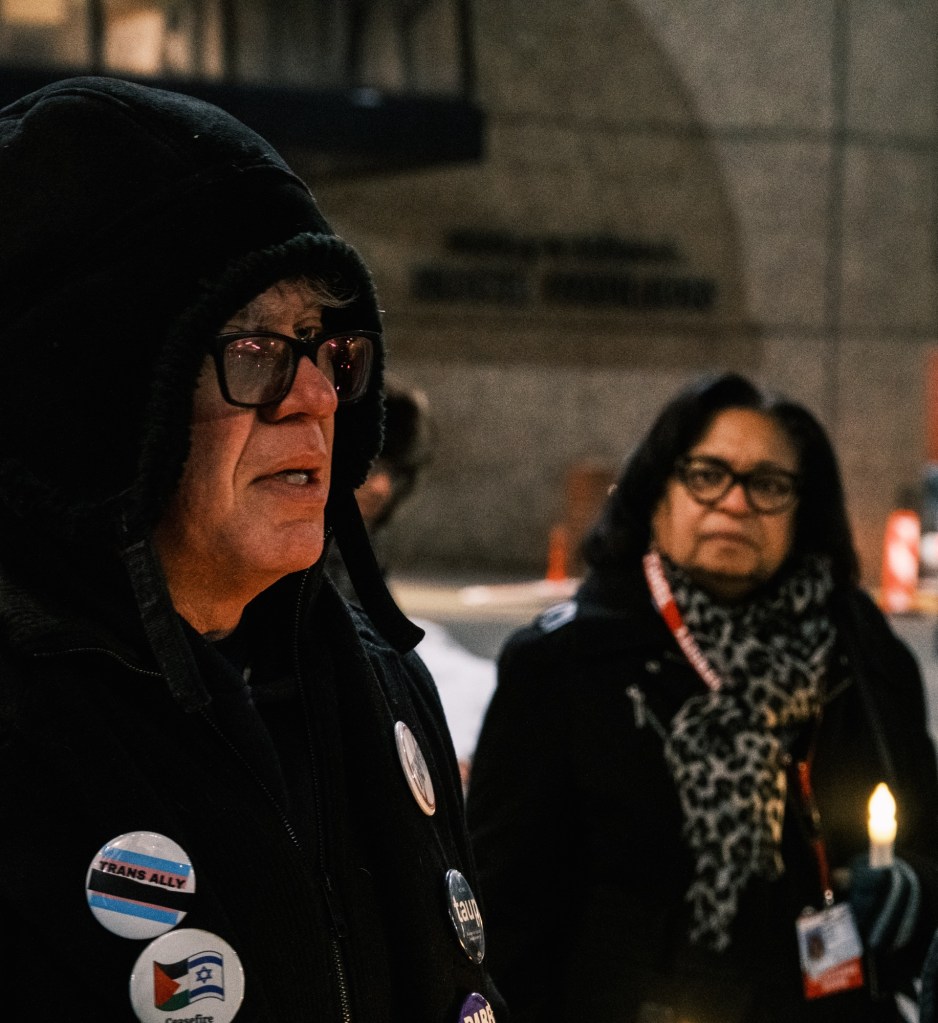
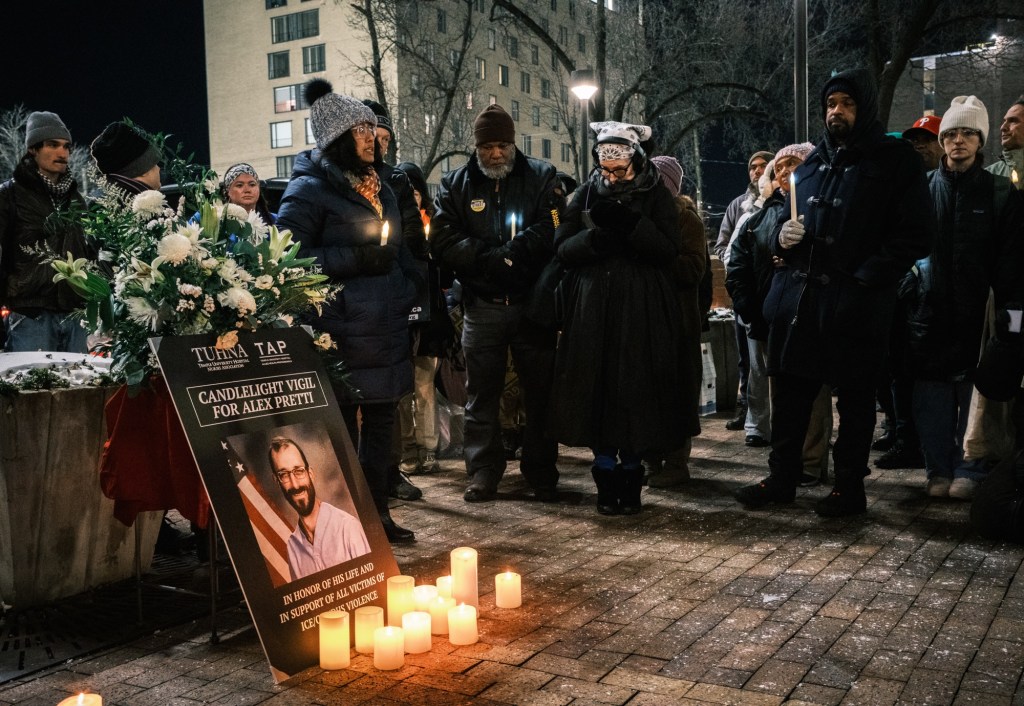
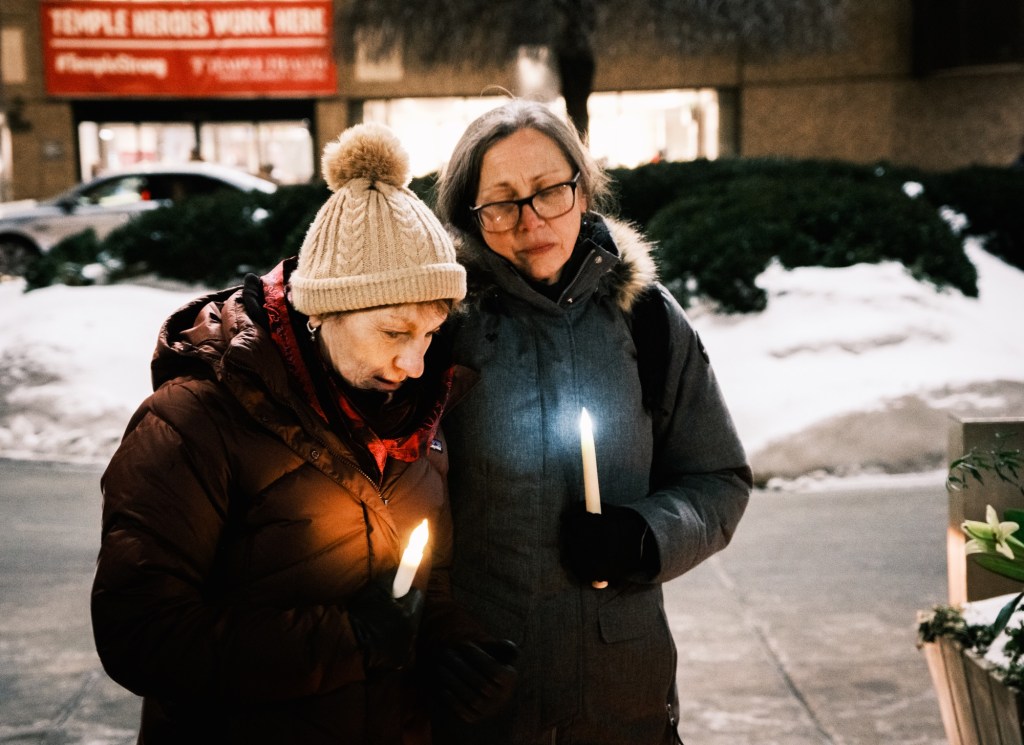
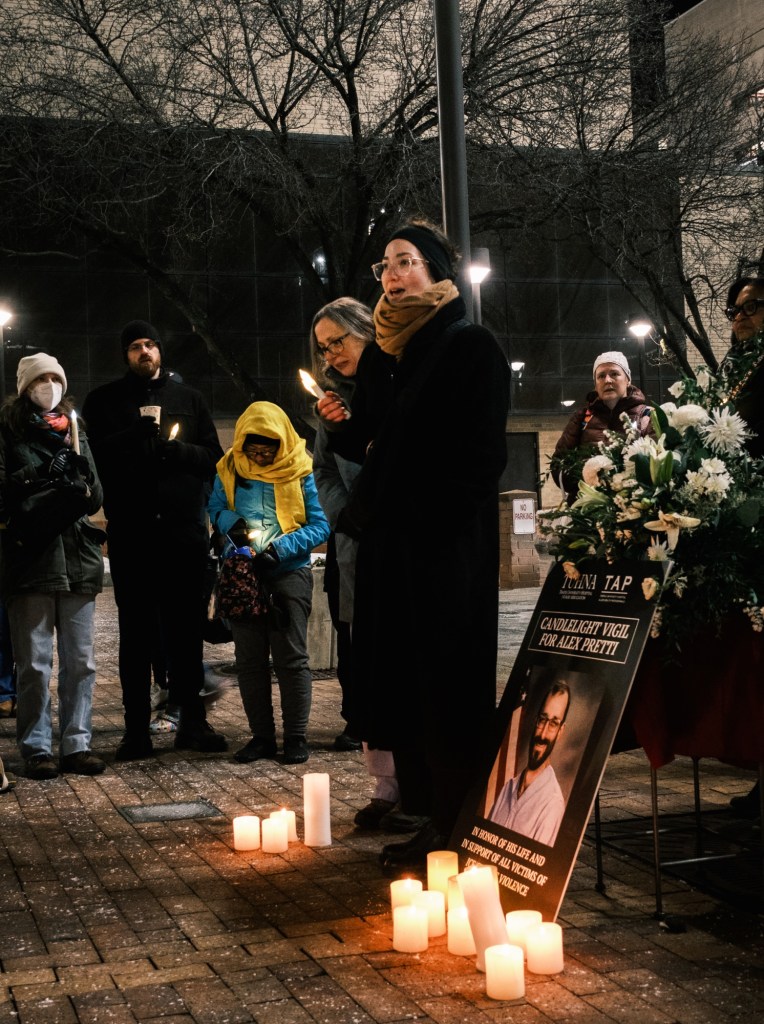
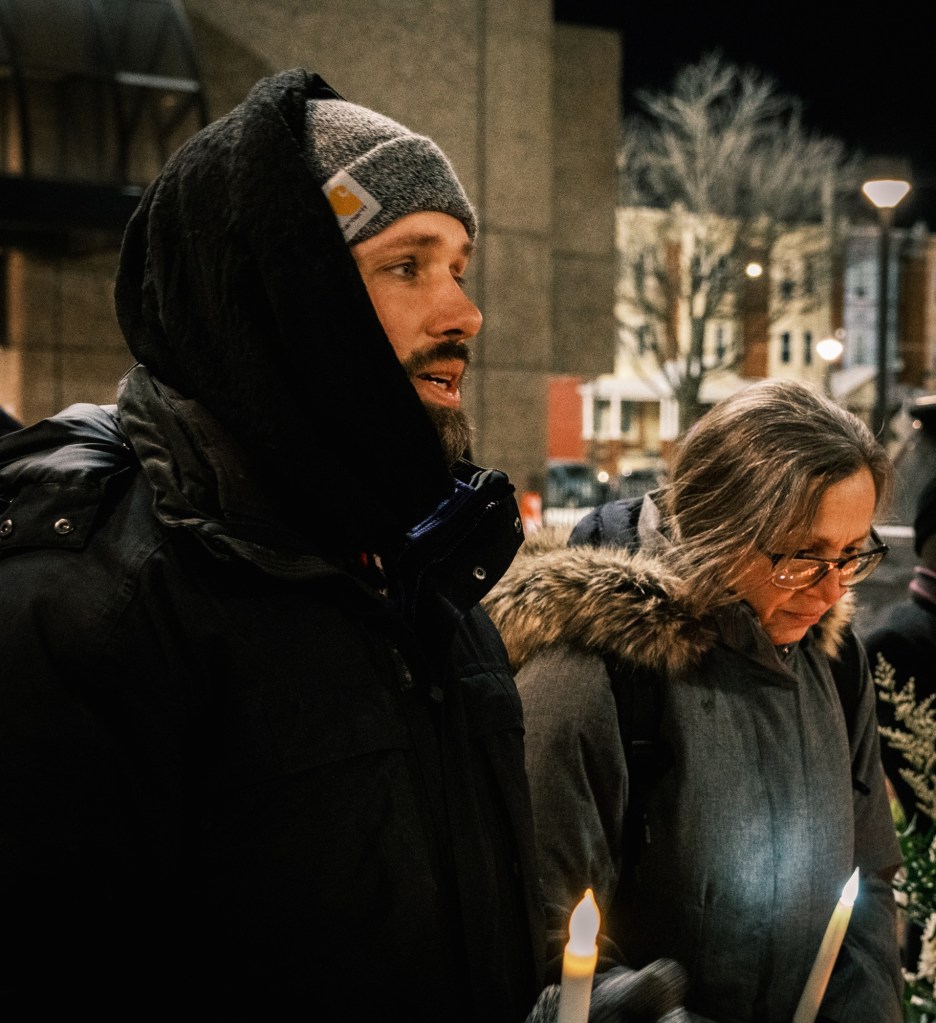
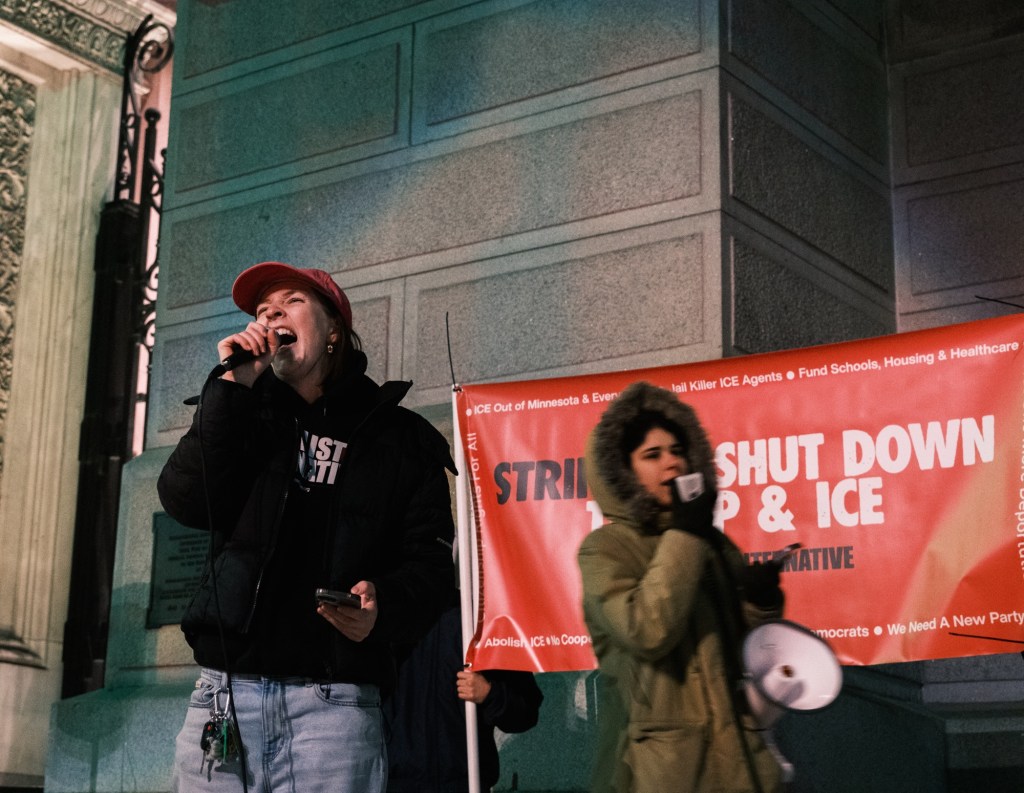
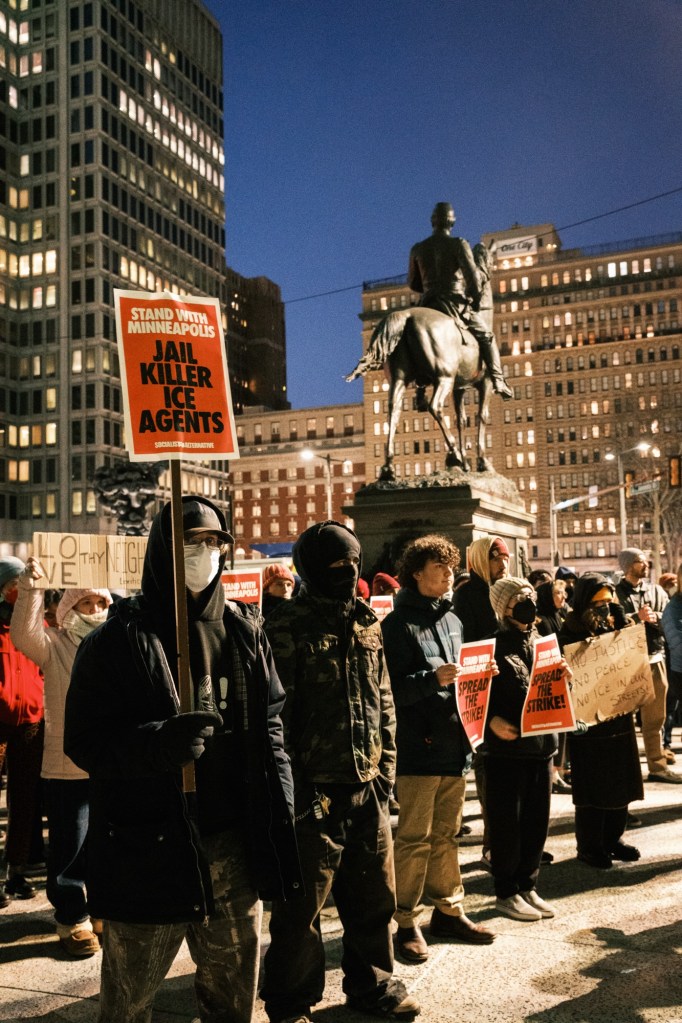
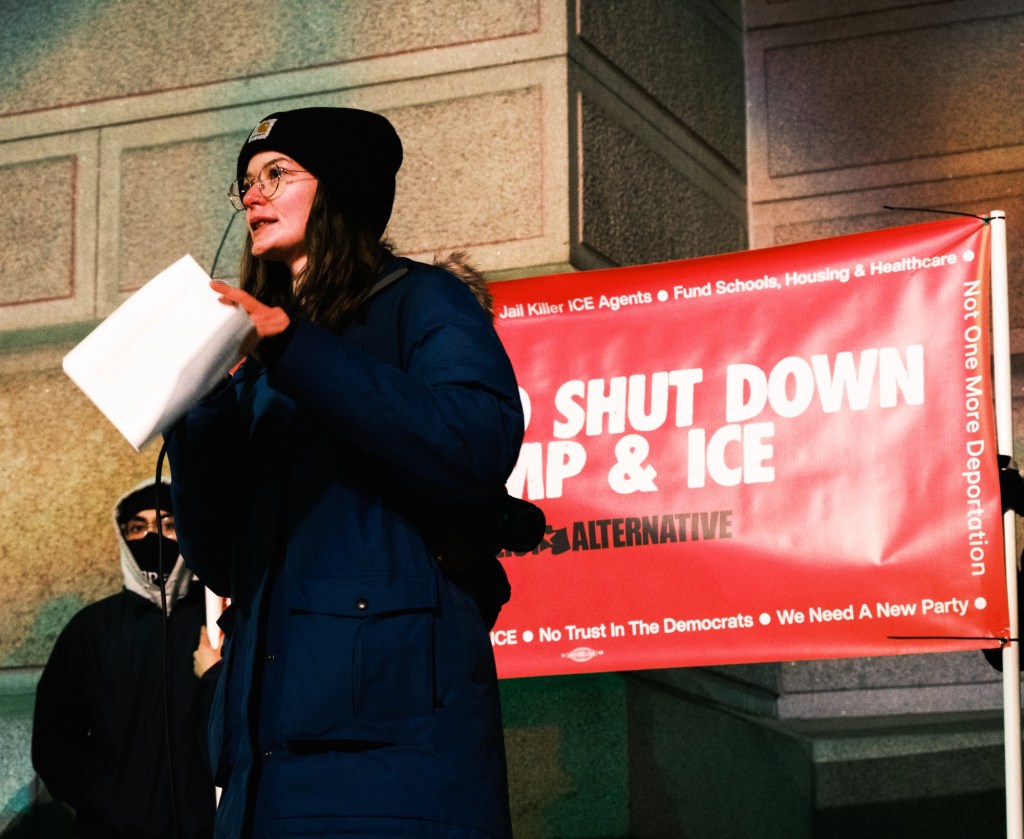
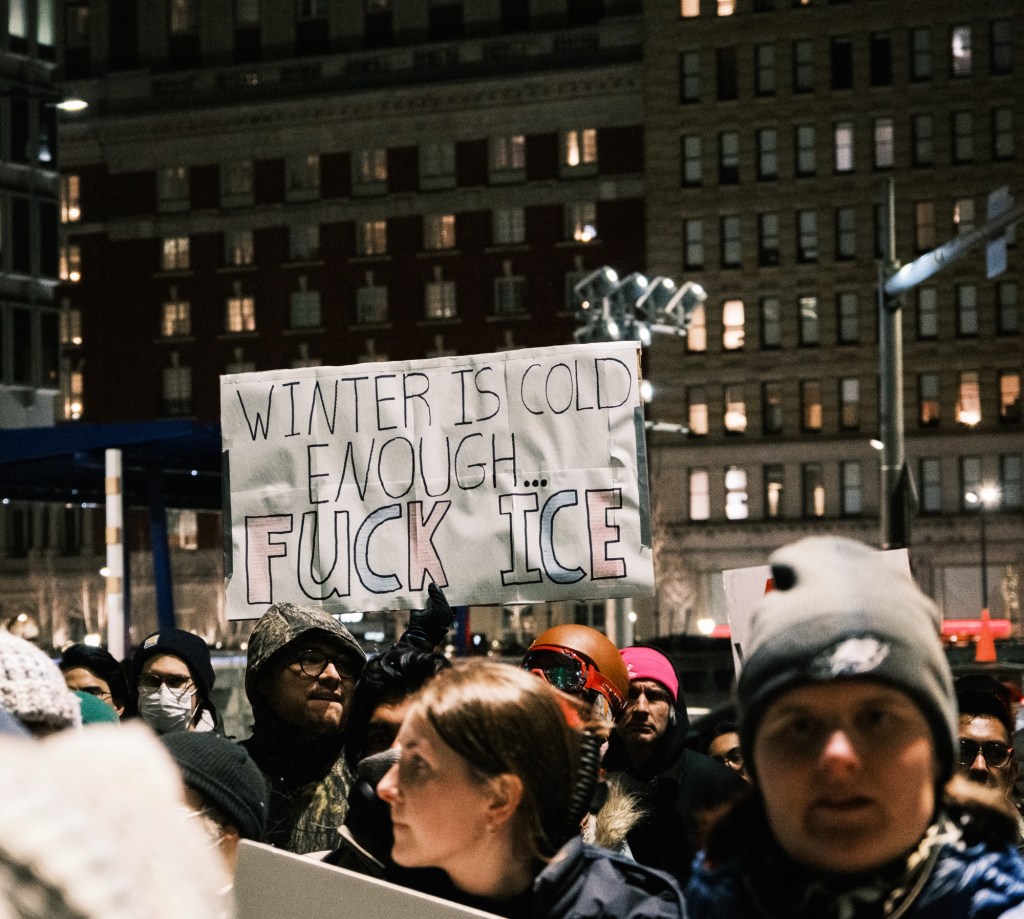
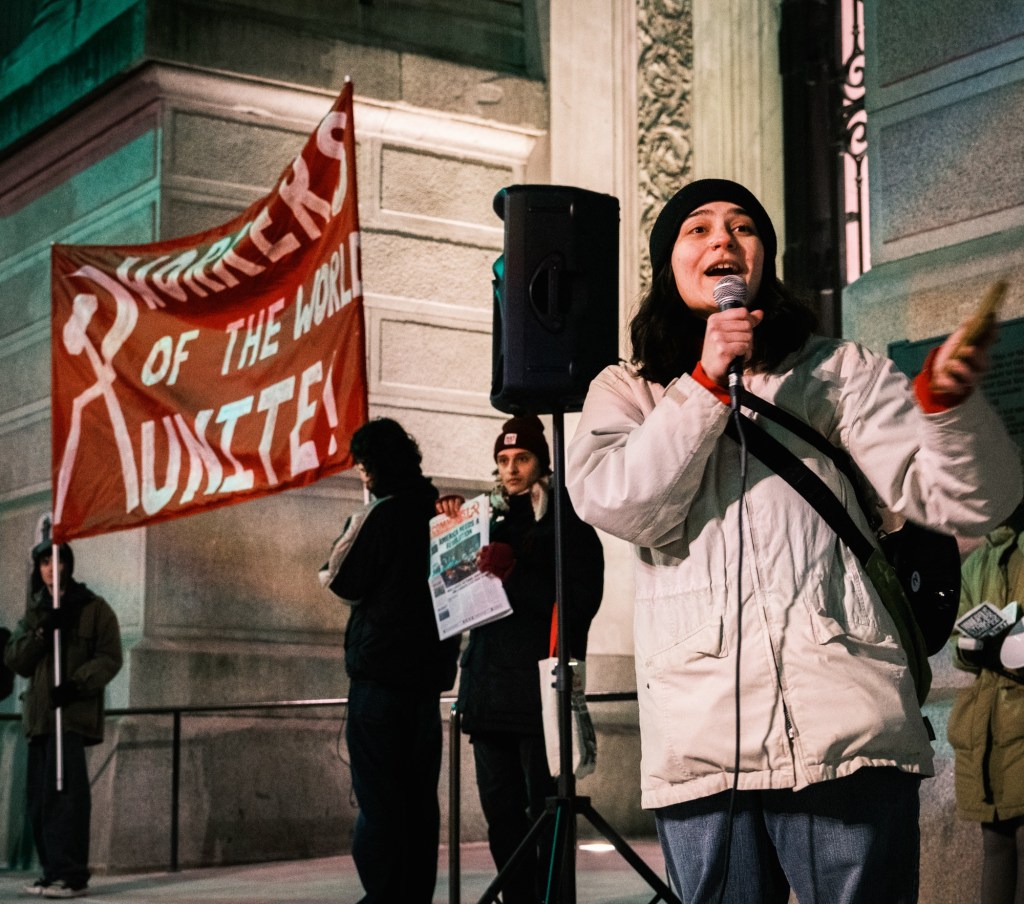
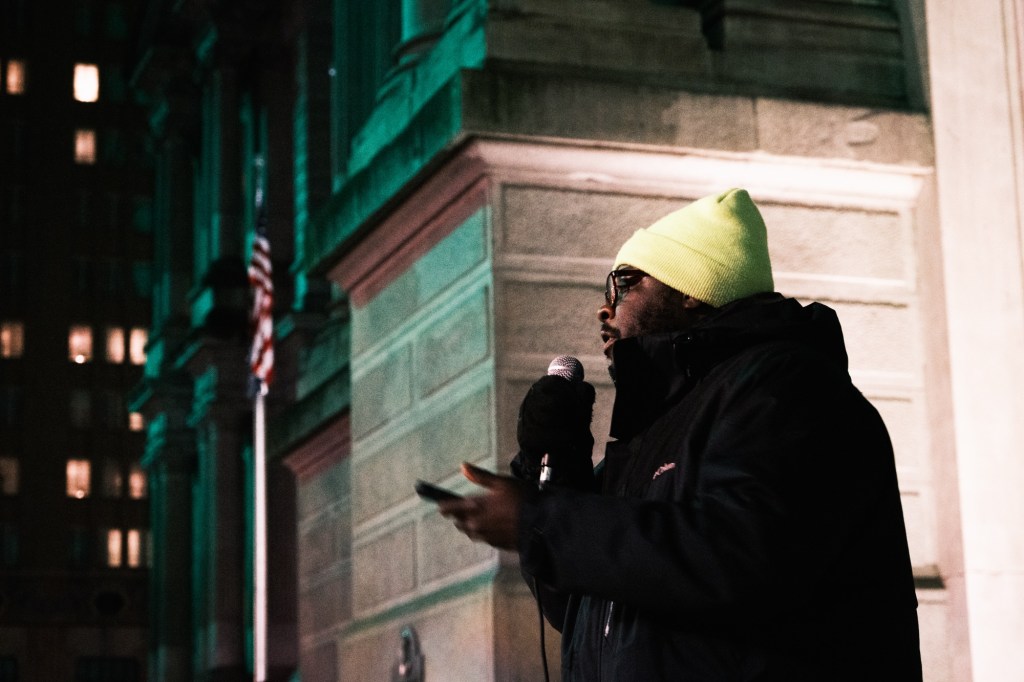
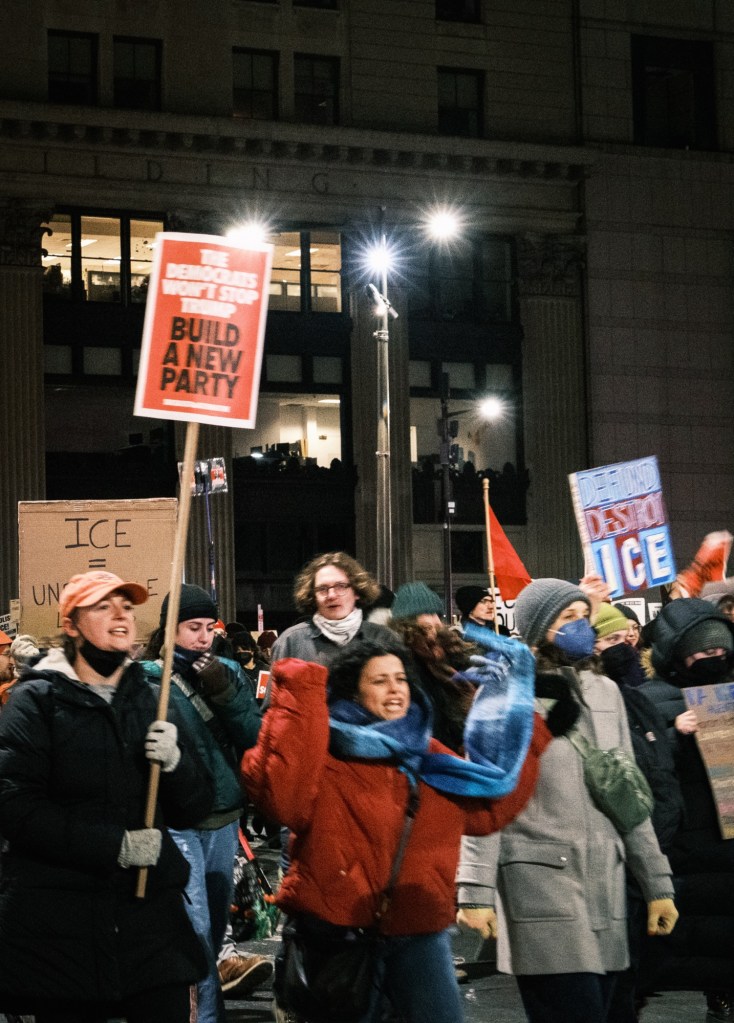
Unionized Temple Hospital healthcare workers held a vigil and speak-out last night for Alex Pretti and all other victims of Ice violence. There was grief and anger in the frigid air… and resolve to fight back.
Alex Pretti and Renee Good are not the first, and I fear won’t be the last. The history of civil rights and class struggle are written in the blood of our ancestors. There is a storm coming and we need to get ready for the fight.
I remain an optimist. The American working class has a deep history of struggle. It will take hard work. It will be complicated. There will be many painful learning experiences. The results are not guaranteed. But I am confident that we will find our feet and rise to the challenges facing us.
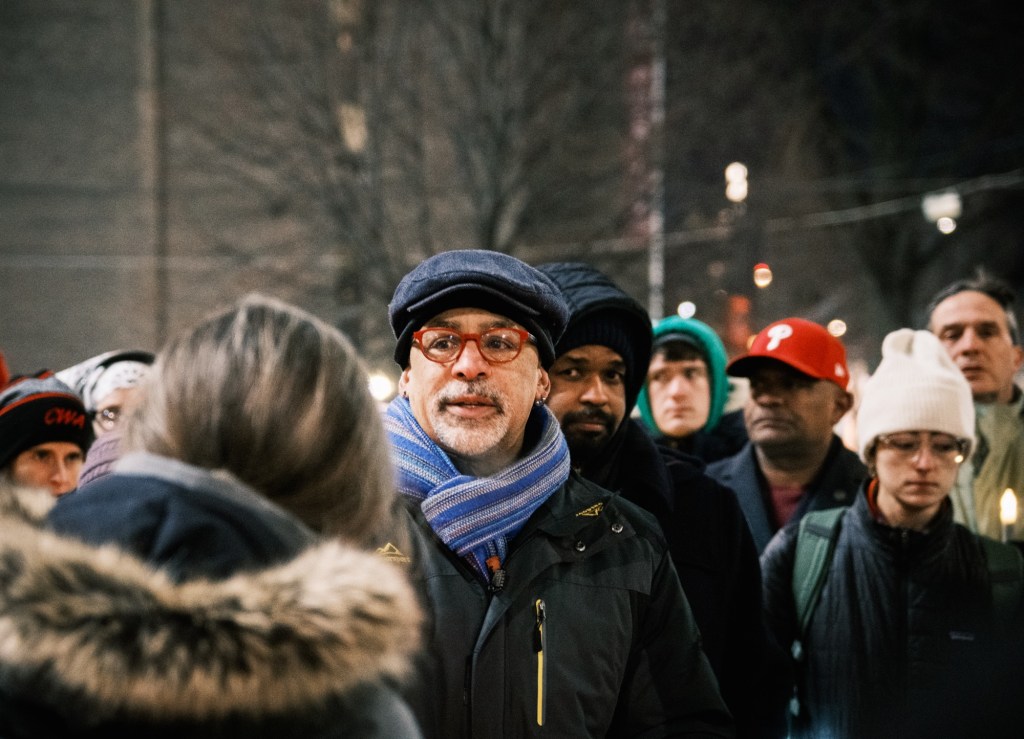
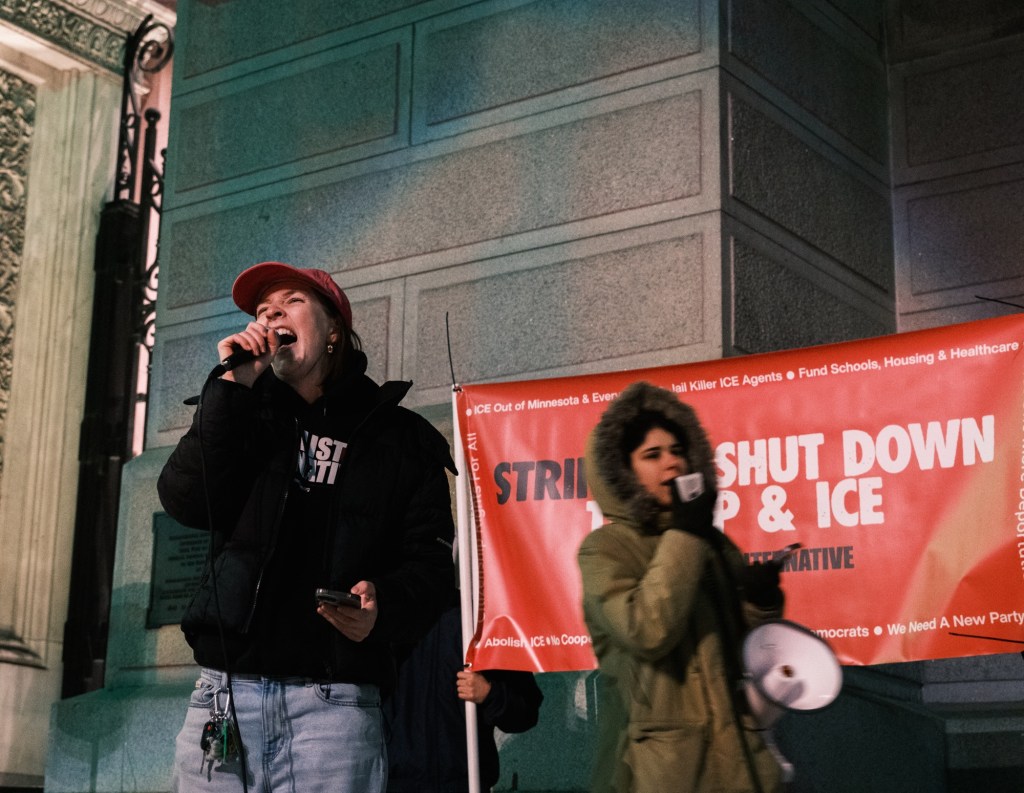
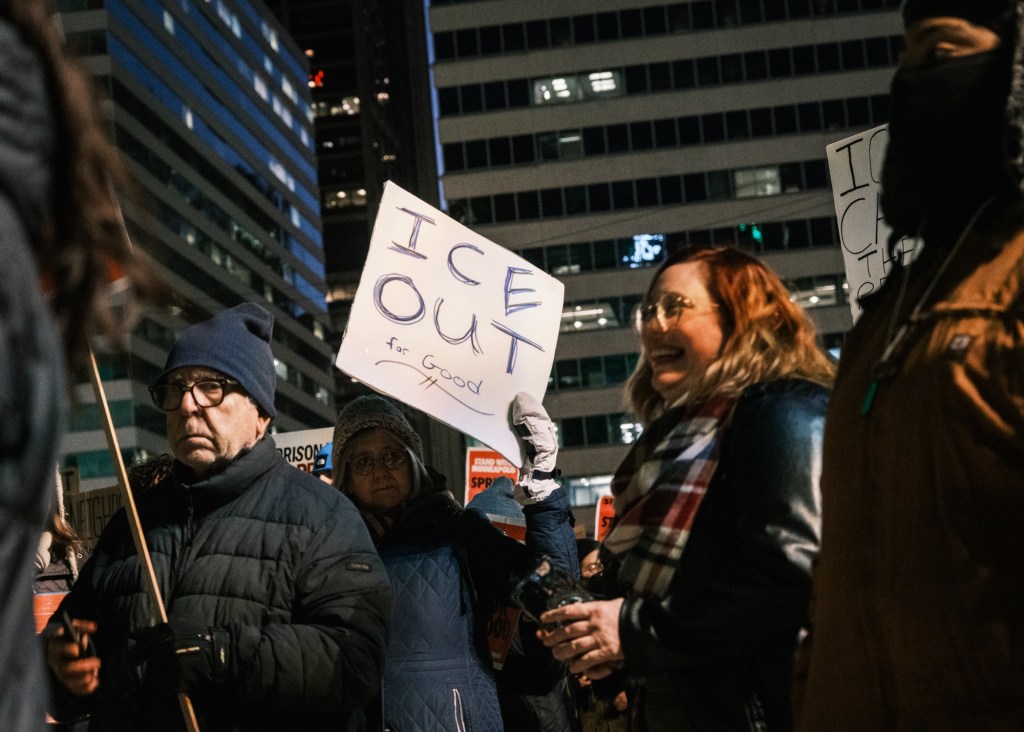
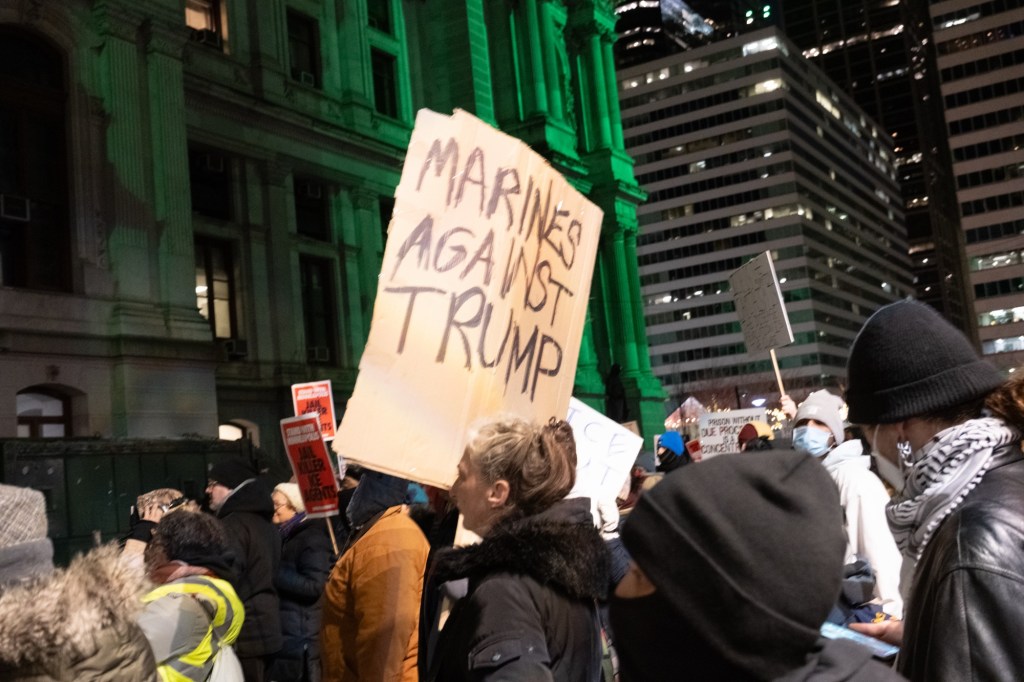
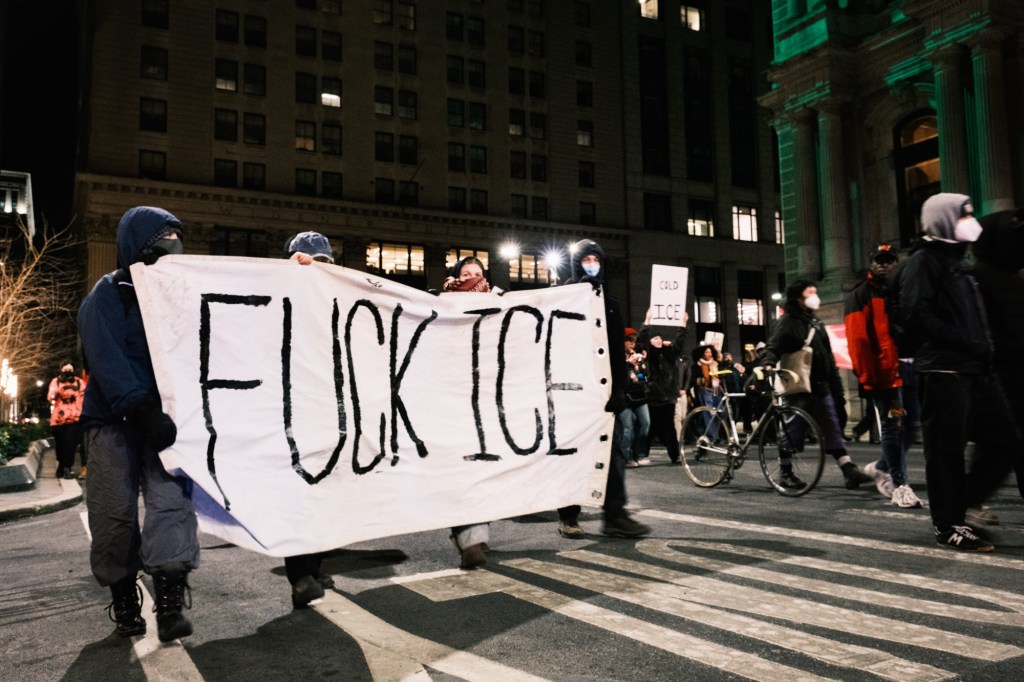
Philly hit the streets last night in solidarity with the January 23 Minneapolis strike to kick Ice out.
When we fight eachother for crumbs off the table it only makes the bosses stronger. We need to stop the deportations now! Full legal status for all!
We need a job for everyone who wants to work with union wages and working conditions. We need safe and reliable public transit. We need fully funded schools and city services. We need improved Medicare for all free at point of service, not massive cuts to Medicaid and medieval work requirements.
We don’t need masked and strapped thugs snatching our friends, neighbors and coworkers off the street. If we let them get away with it, this occupying army will be snatching us off picket lines next.
It’s time to get organized before Ice comes to Philly in force. Join an existing neighborhood response group or organize one on your block. Get trained up and know your rights. Support local orgs already doing this work:
Both Dems and Republicans have failed us. Both parties take the bosses money and keep us arguing with each other. It’s long past time to build a new working class party to fight for what need now instead of what the boss tells us is ‘reasonable’.
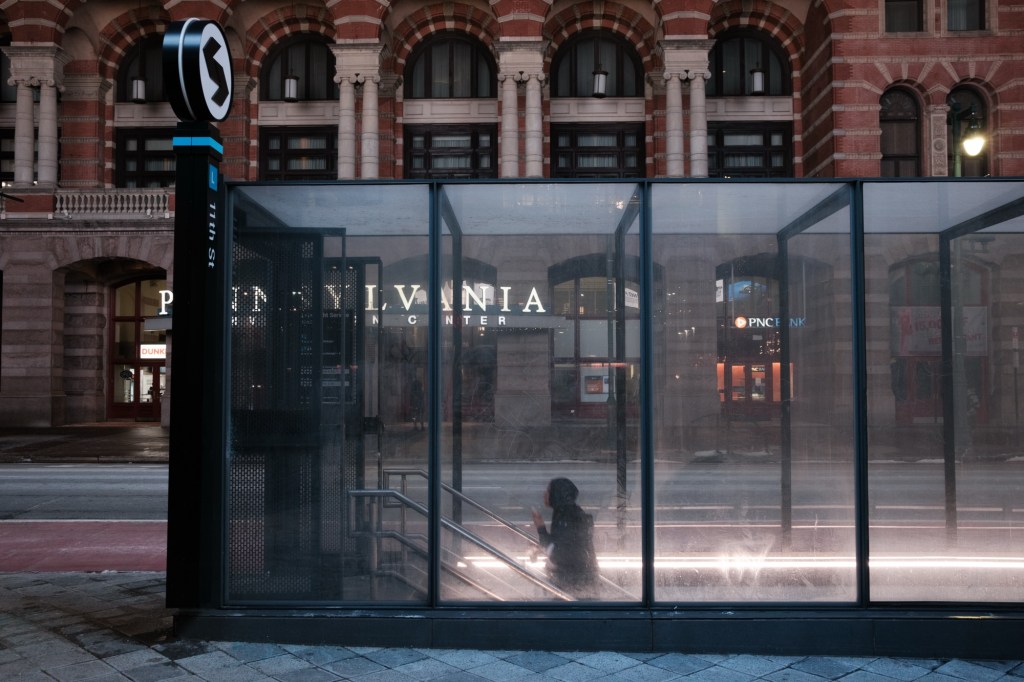
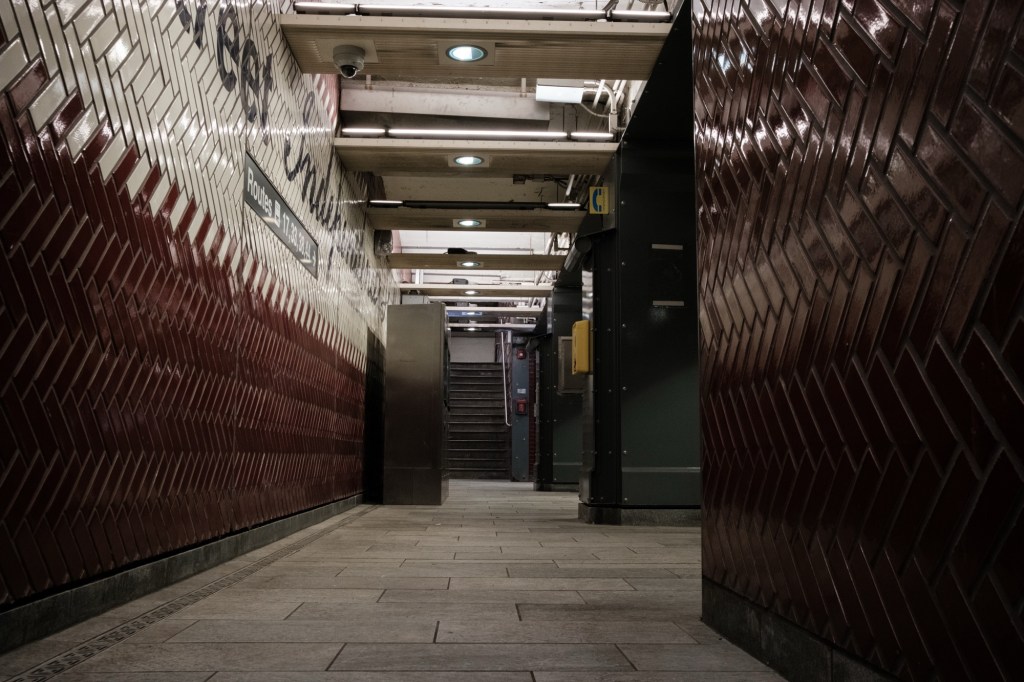
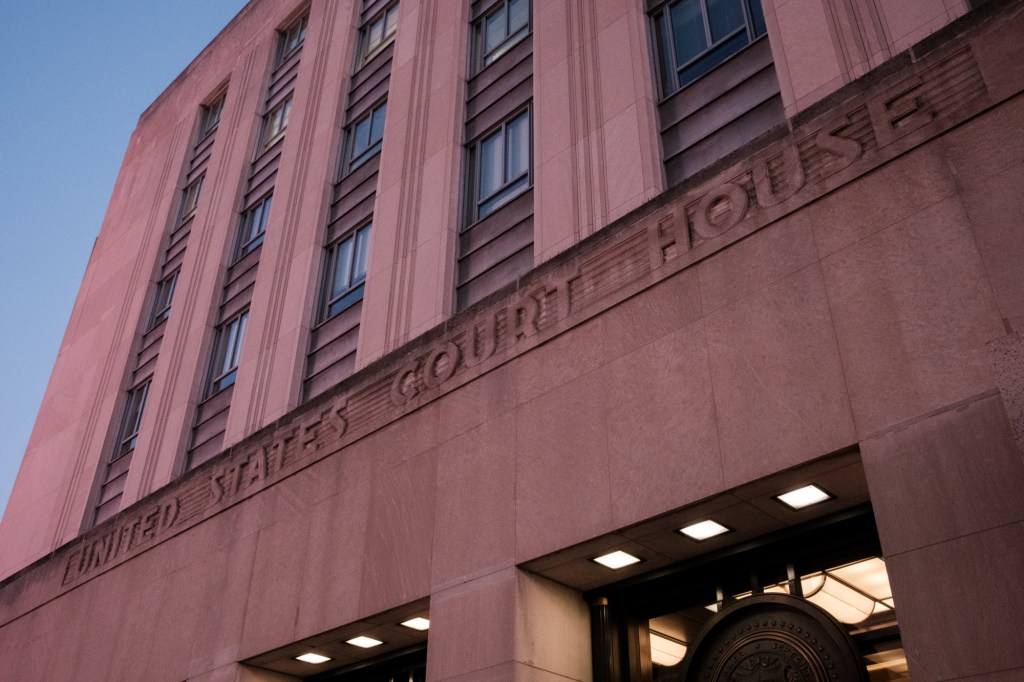
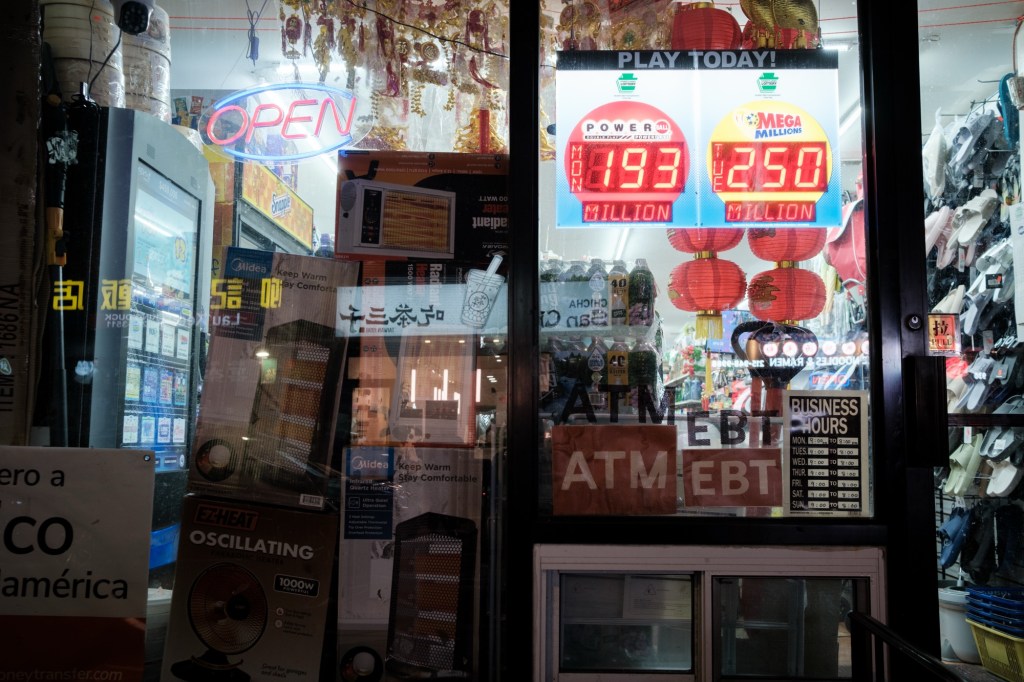
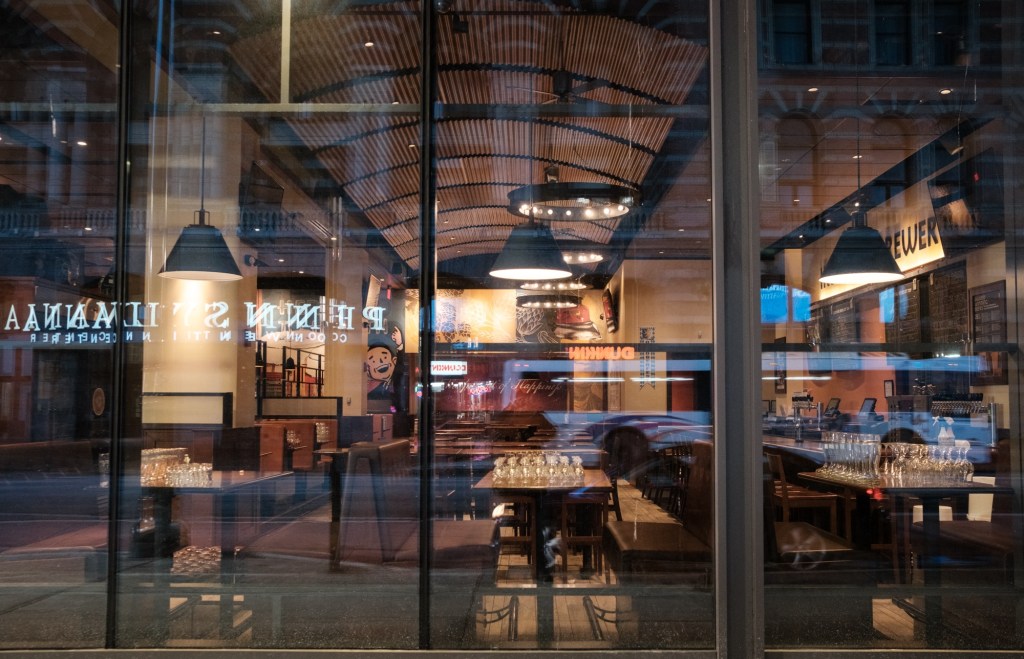
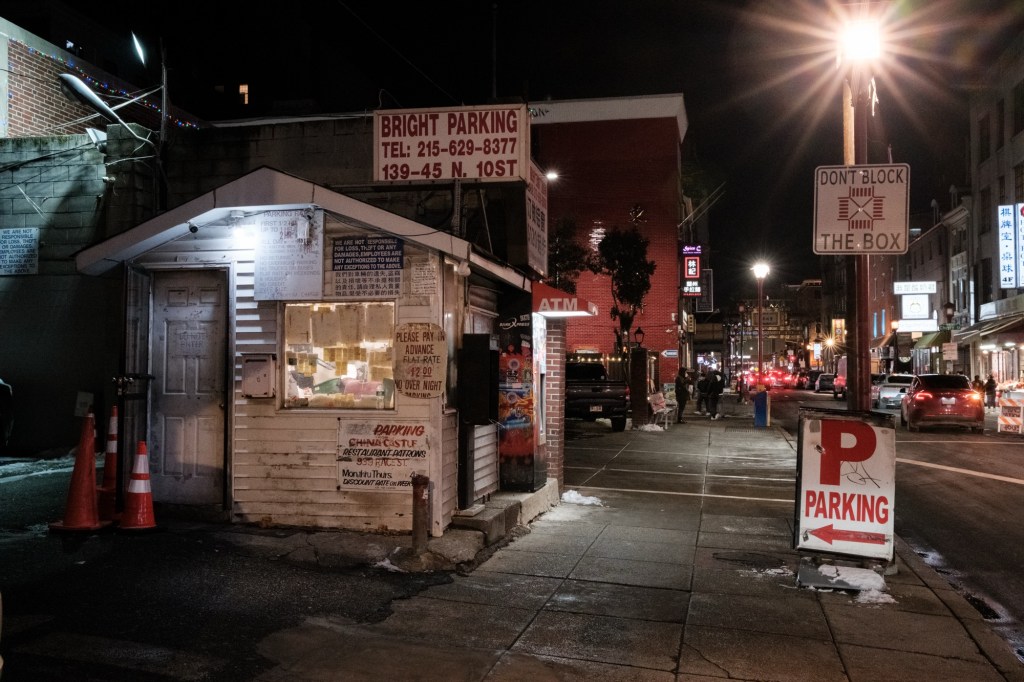
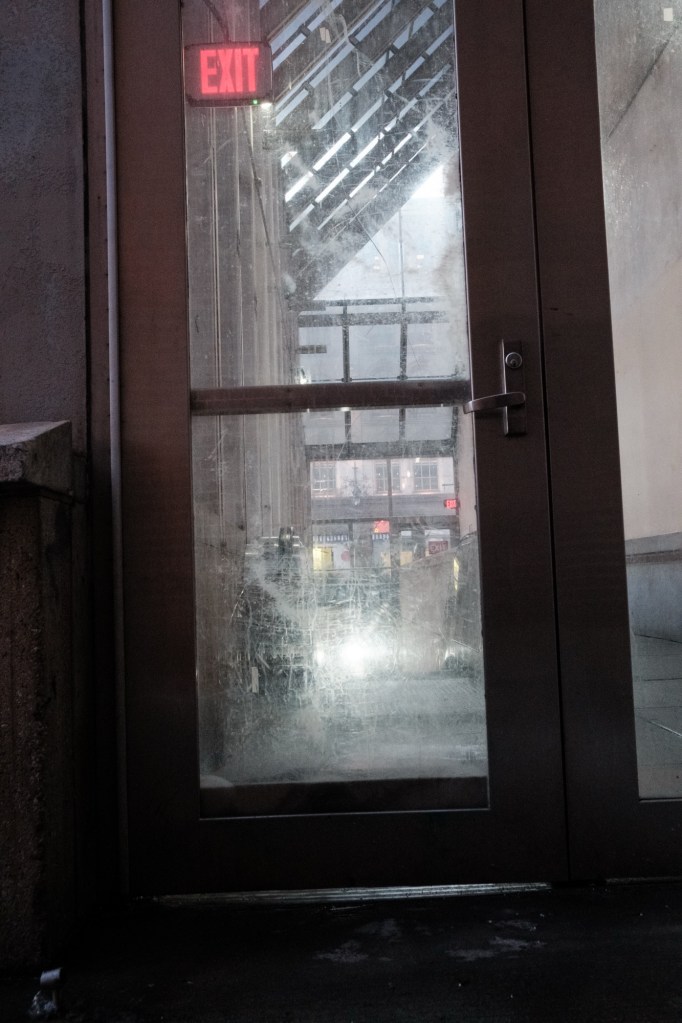
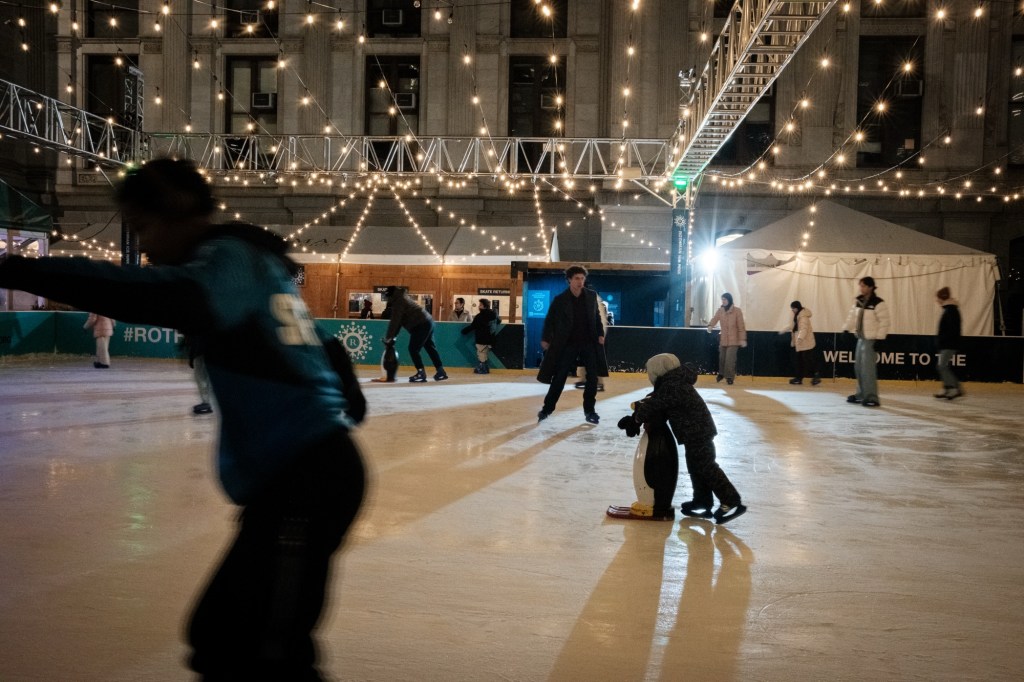
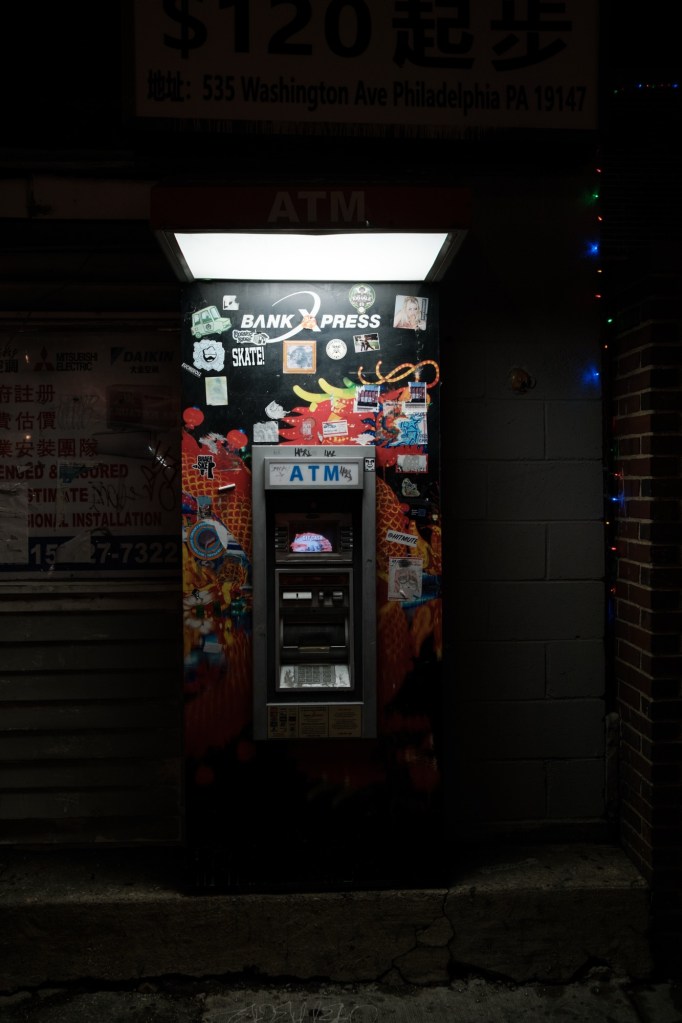
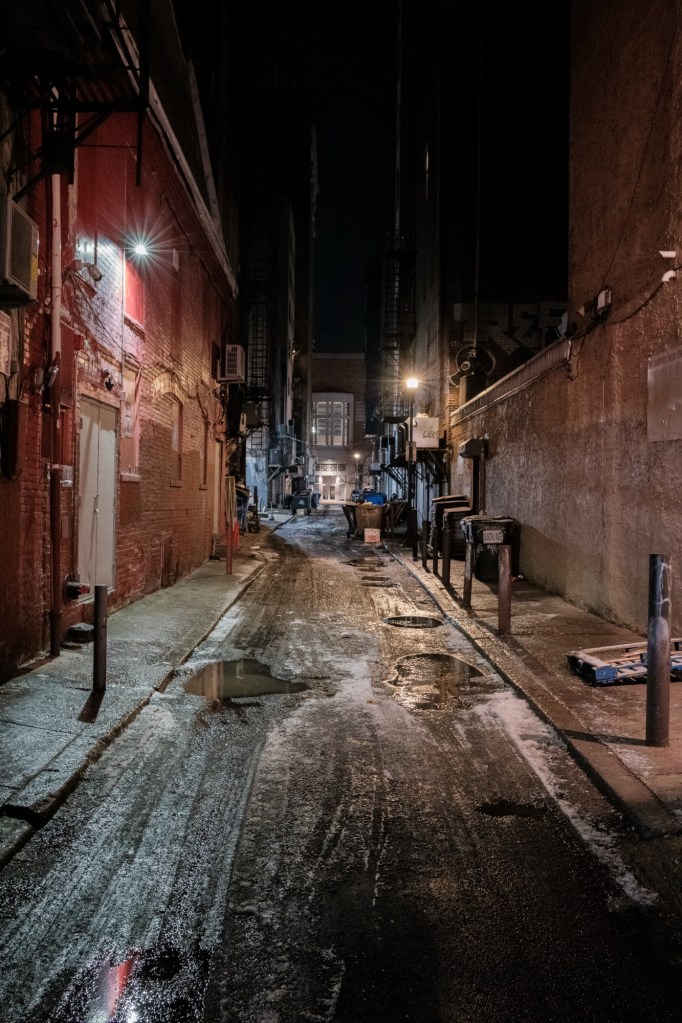
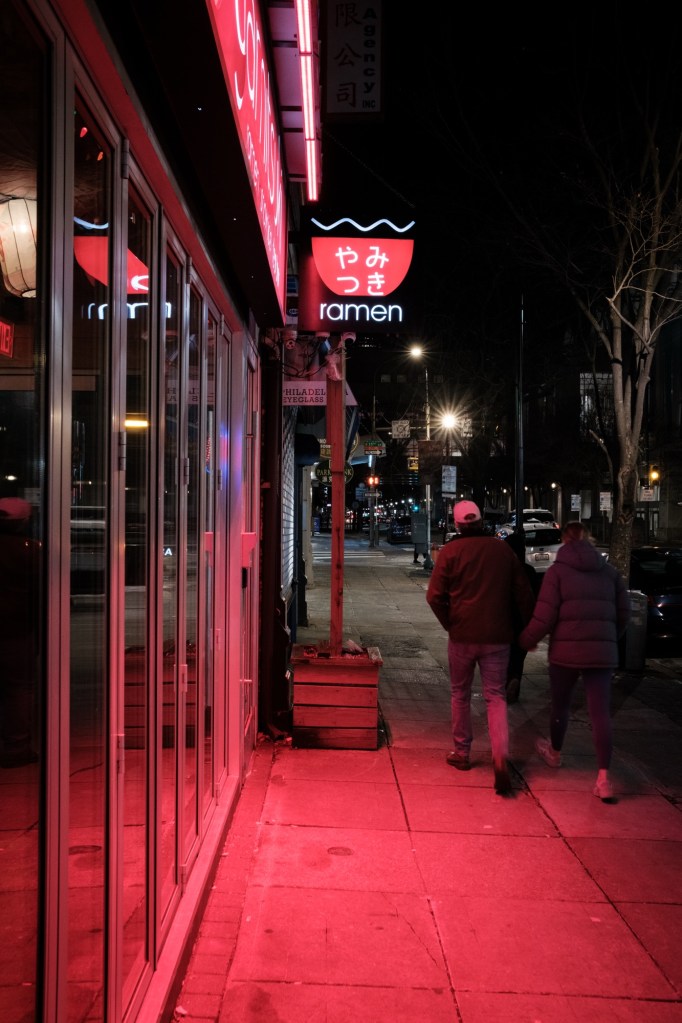
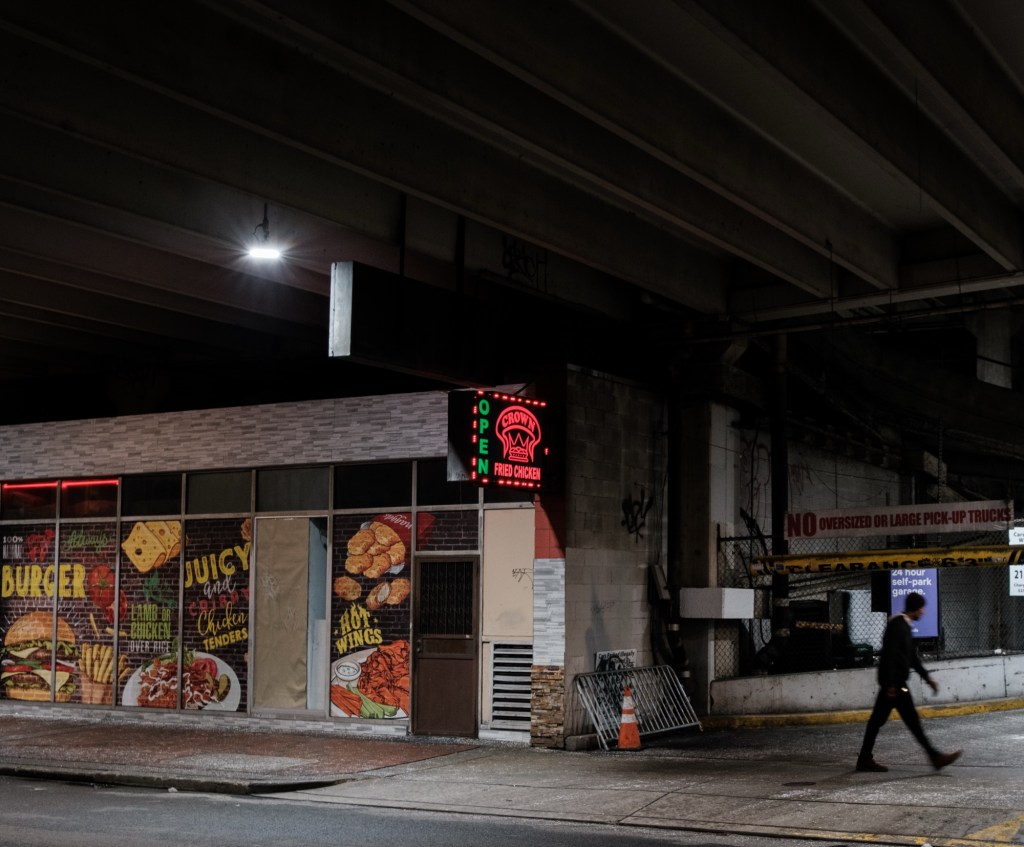
A winters evening stroll through Center City Philadelphia. There’s always magic in the twilight. The city changes shape and sound. The sharp winter air cuts through and the debris of the day hides in the shadows. The night slowly comes to life.
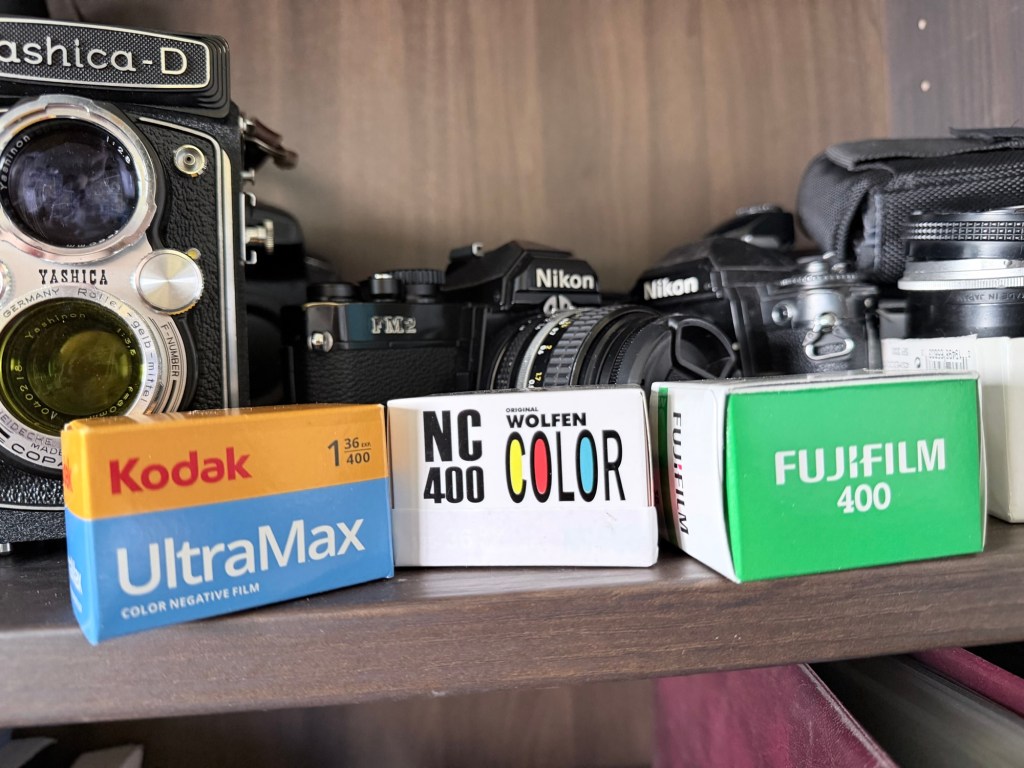
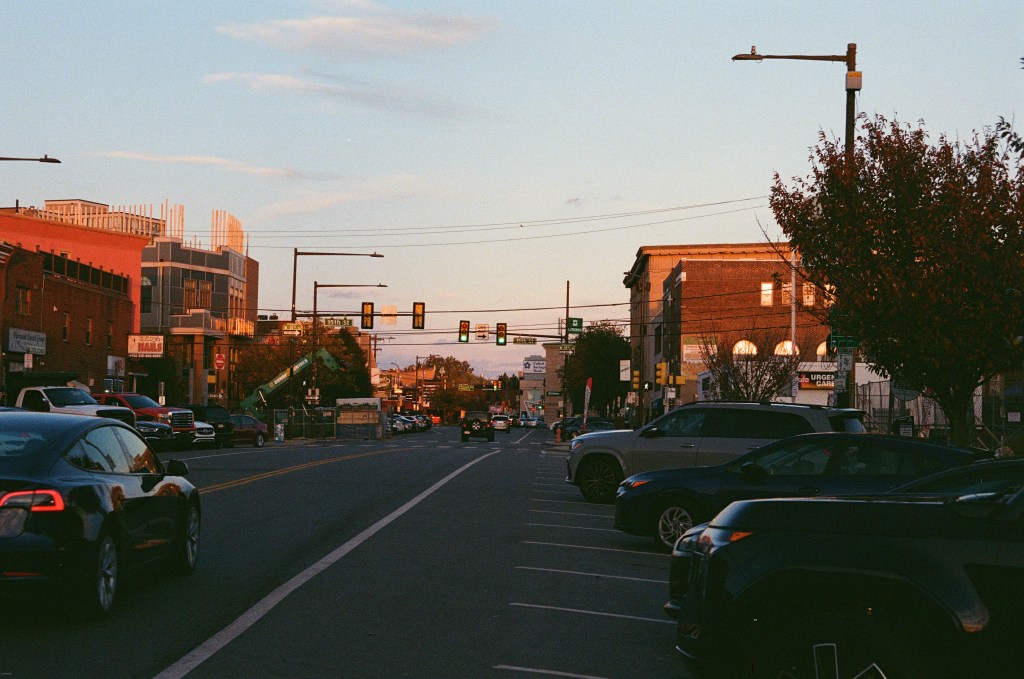
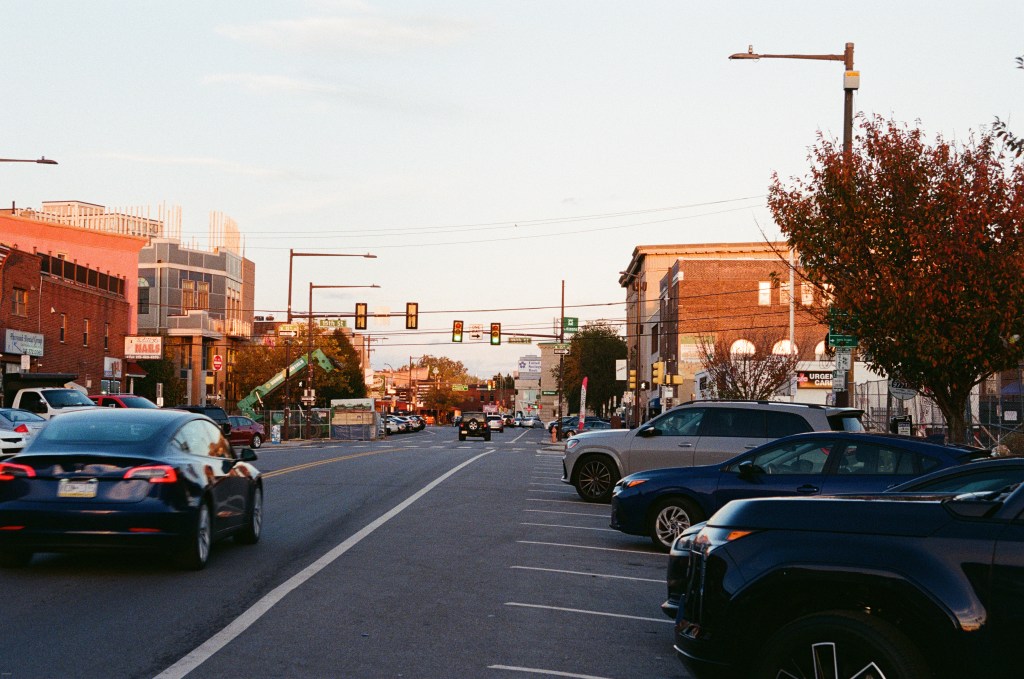
Since Fuji Superia400X has been discontinued 😦 I’m trying out a couple different ISO400 C-41 film stocks. The political economy of film photography is… well… weird RN… and film pricing is responding to inflation, fashion, private equity capital flows and the market distortions caused by Kodaks 2012 bankruptcy that are still rattling around the global economy. I don’t really obsess about which color film I use. My target is an under $10/36exposure roll of ISO400 C-41 process film for everyday work. When I find one that works for me I buy a brick, stash it in the freezer and use it till it’s gone.
One thing I liked about Superia was it did this when you overexposed it 1 stop… You got increased saturation, contrast and a bump in shadow detail without blowing out highlights. It also shifted a bit warmer without getting weird.:
So I bought some current production film and shot some test rolls: Kodak UltraMax400, the new Fuji400, and Wolfen NC400, to see how they respond to the light. I bracketed 3 exposures of each scene: box speed , 1 stop under, and 1 stop over. Developed normally – not pushed or pulled – we get normal, under, and over exposed images.
For consistency I used the same camera and lens (Nikon F6 w/Nikkor 28-105 f/3.5-5.6), and the cameras internal matrix metering mode with no filters or fill flash. All 3 rolls were processed and scanned by Indie Photo here in Philly.
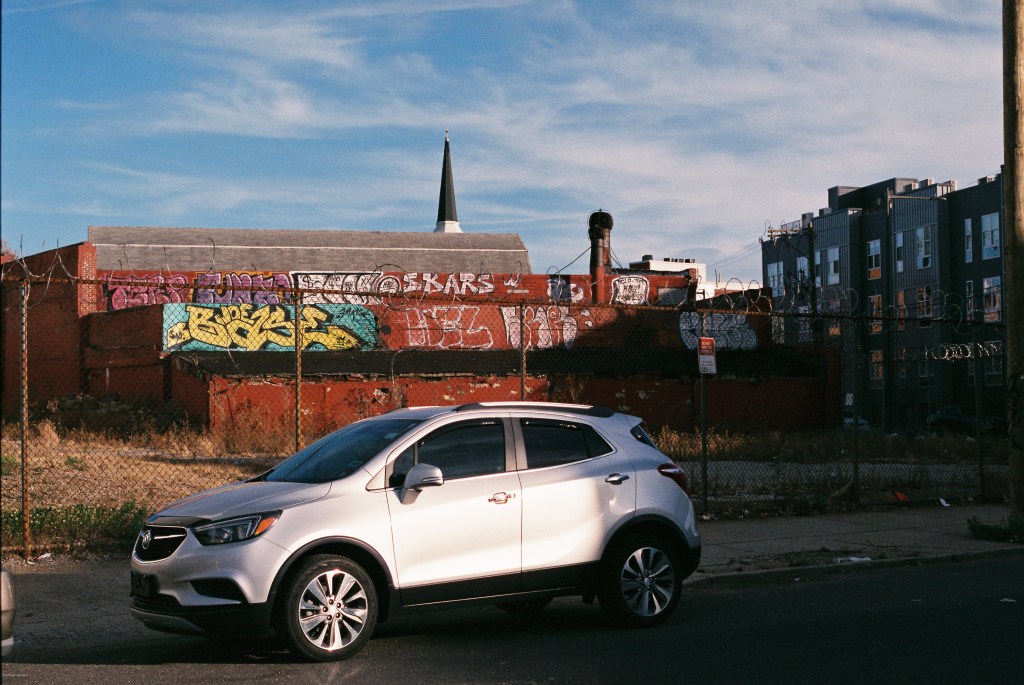
The light in many of these shots pushes at the limit of the films dynamic range that could be controlled through lots of traditional techniques, but the whole point of this experiment was to test those limits. Here’s the results for Kodak UltraMax400:
My biggest takeaway is that this film stock is consistent with other Kodak consumer films I’ve used. It’s a bit ‘hard’ and not quite as forgiving as the old Fuji SuperiaX or Kodak Portra. Over exposed we do get increased saturation but with less latitude, more contrast, and the highlights tend to blow out. Looking at the sunset we got a dramatic color shift that wasn’t correctable. It also doesn’t like being underexposed, we get a magenta shift in the shadows. Nothing that can’t be handled with more careful and intentional exposures (or some tweaking in Lightroom). It has its strengths – and its weaknesses are all manageable, but I won’t be shooting this emulsion at ISO200 on a routine basis.
Philly area Trumpers show their stuff in Center City. I’m usually on the other side of the line but went inside to look and listen. About halfway through the event most of the mainstream Trump supporters left and hard right took control. When was the last time you saw organized white supremacists marching down Market St?
Here’s a few frames.
Shot on Ilford HP5 – Nikon FE2 (35 f/2, 50 f/1.4 & 105 f/2.5) – Developed and scanned at home.
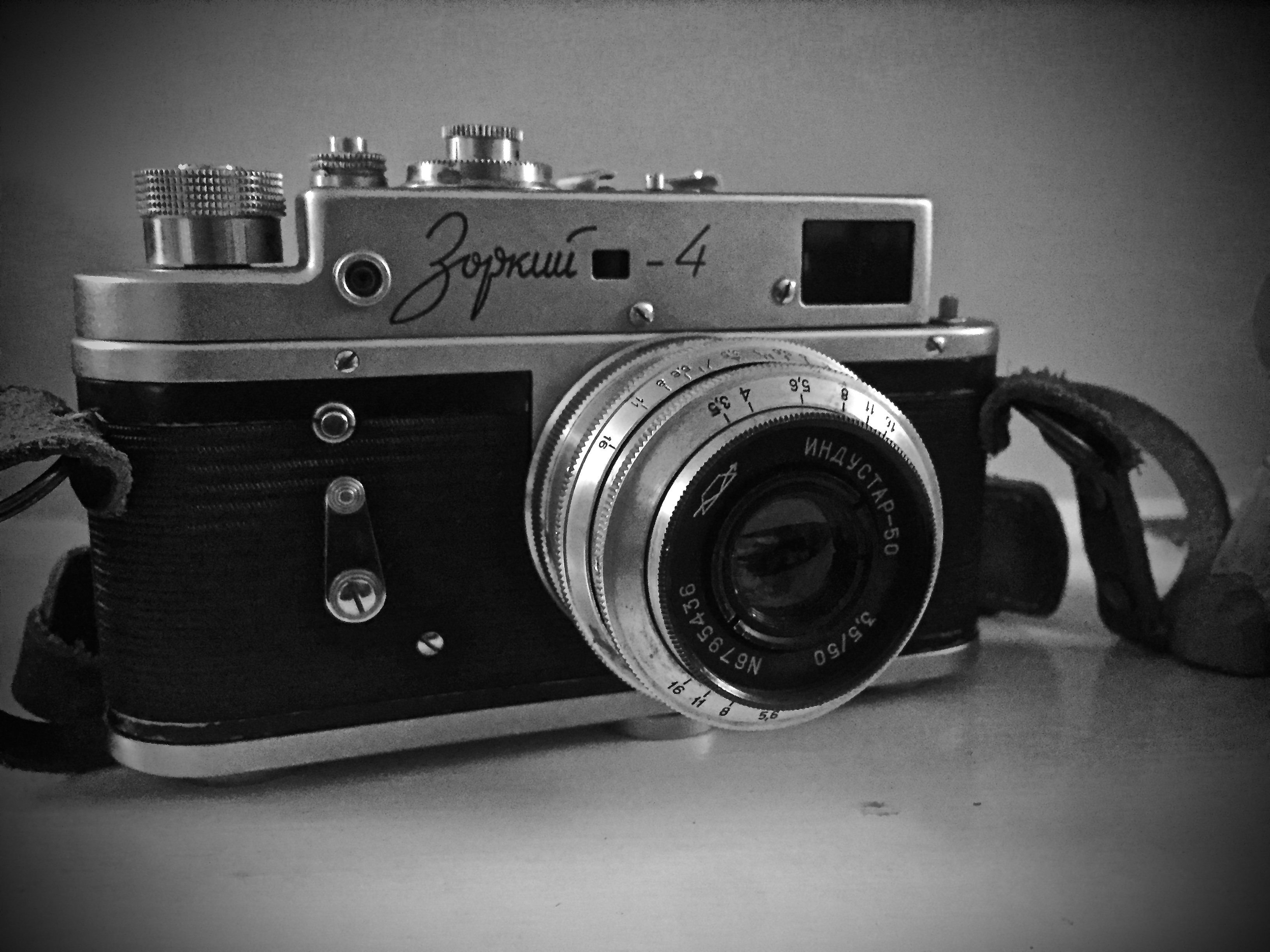
After World War 2 the Soviets took material, tooling, dies, and in some cases entire factories and the skilled workers to run them, from occupied Germany back to the USSR as war reparations. All of Germany’s patents were also released into the public domain by the allied governments. The Soviets (and others) began manufacturing Leica and Contax clones for internal and export markets – this was also the basis of Japans post war camera industry- and so we get this Zorki 35mm Rangefinder, a Soviet derivative of the Leica 3.
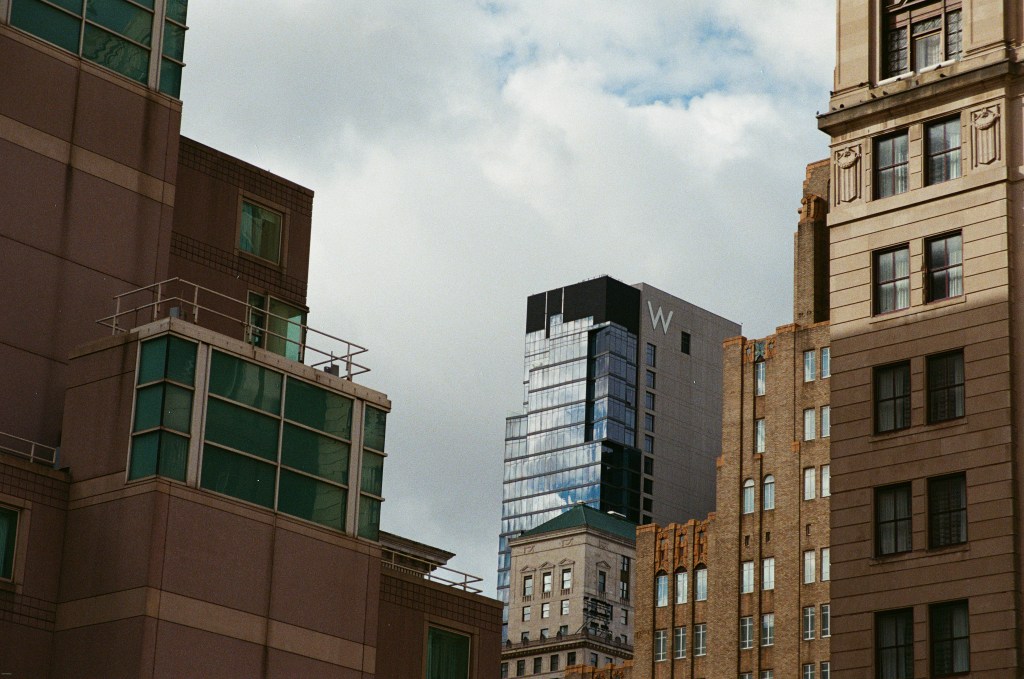
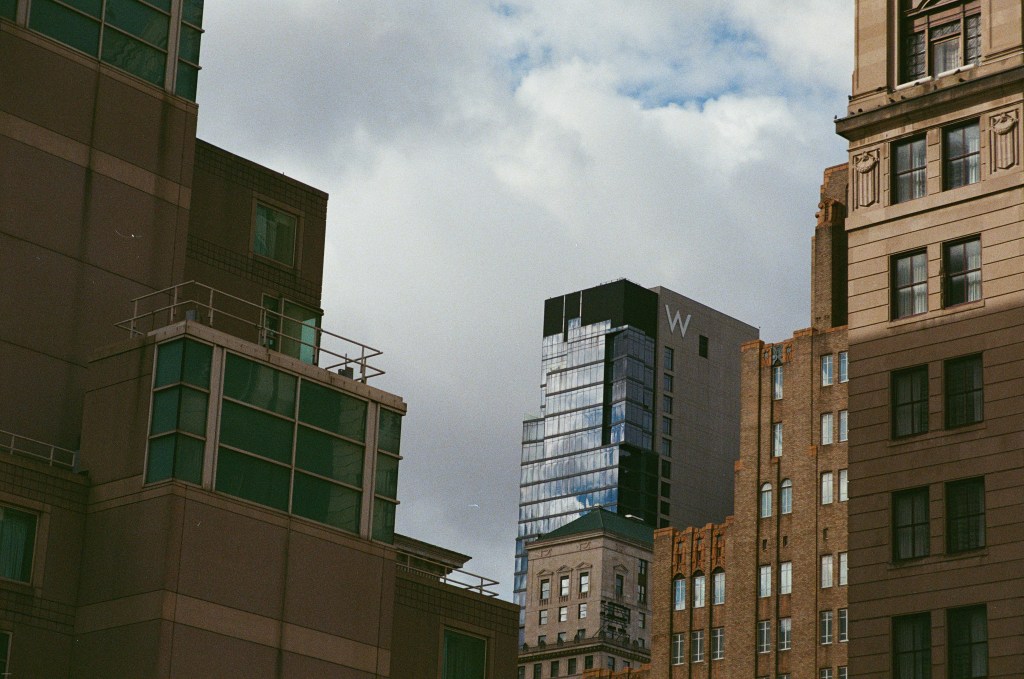
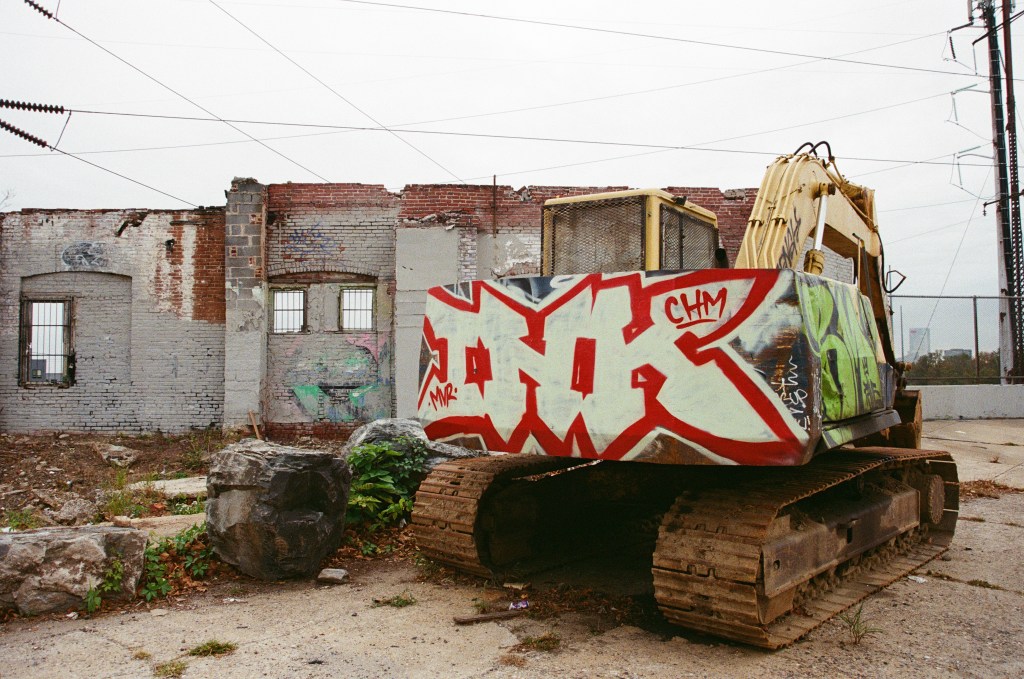
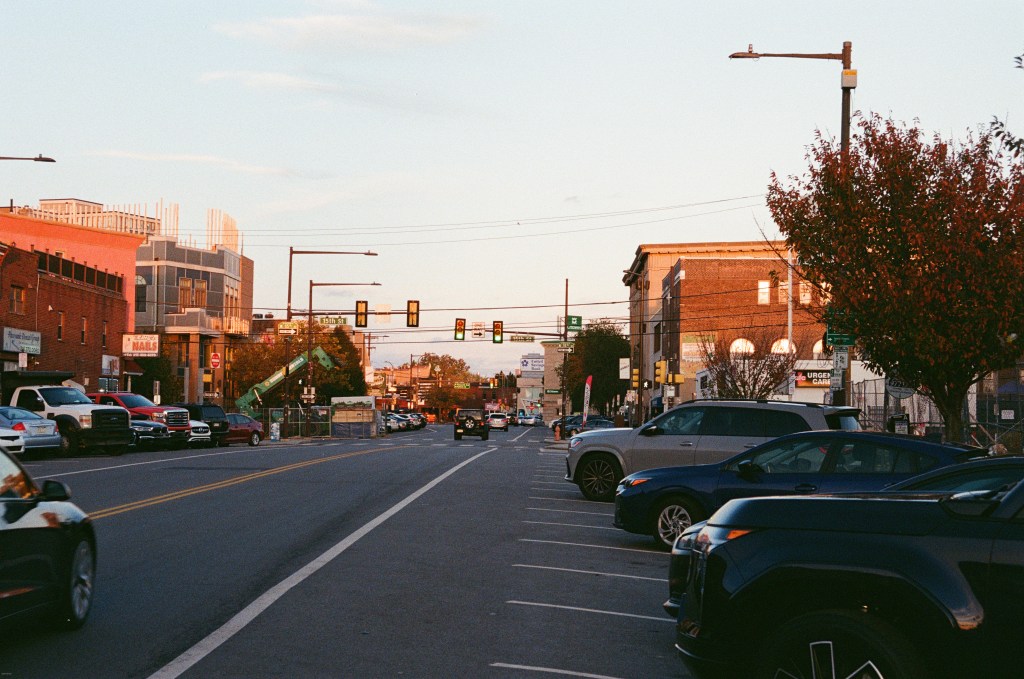
This one has commemorative markings celebrating the 50th anniversary of the October Revolution so I’m assuming a manufacture date of about 1967. It’s a bit clunky, the film registration is slightly off, there’s no batteries or exposure meter, but it fits in my coat pocket and is actually a lovely small camera to carry around. Here’s a few frames from some test rolls. The color negatives were developed and scanned by a local lab, the b&w shots were hand developed and scanned at home.
Zorki 4 35mm rangefinder w/50mm f/3.5 lens – Fomopan100, Kodak Tri X, and Portra 160
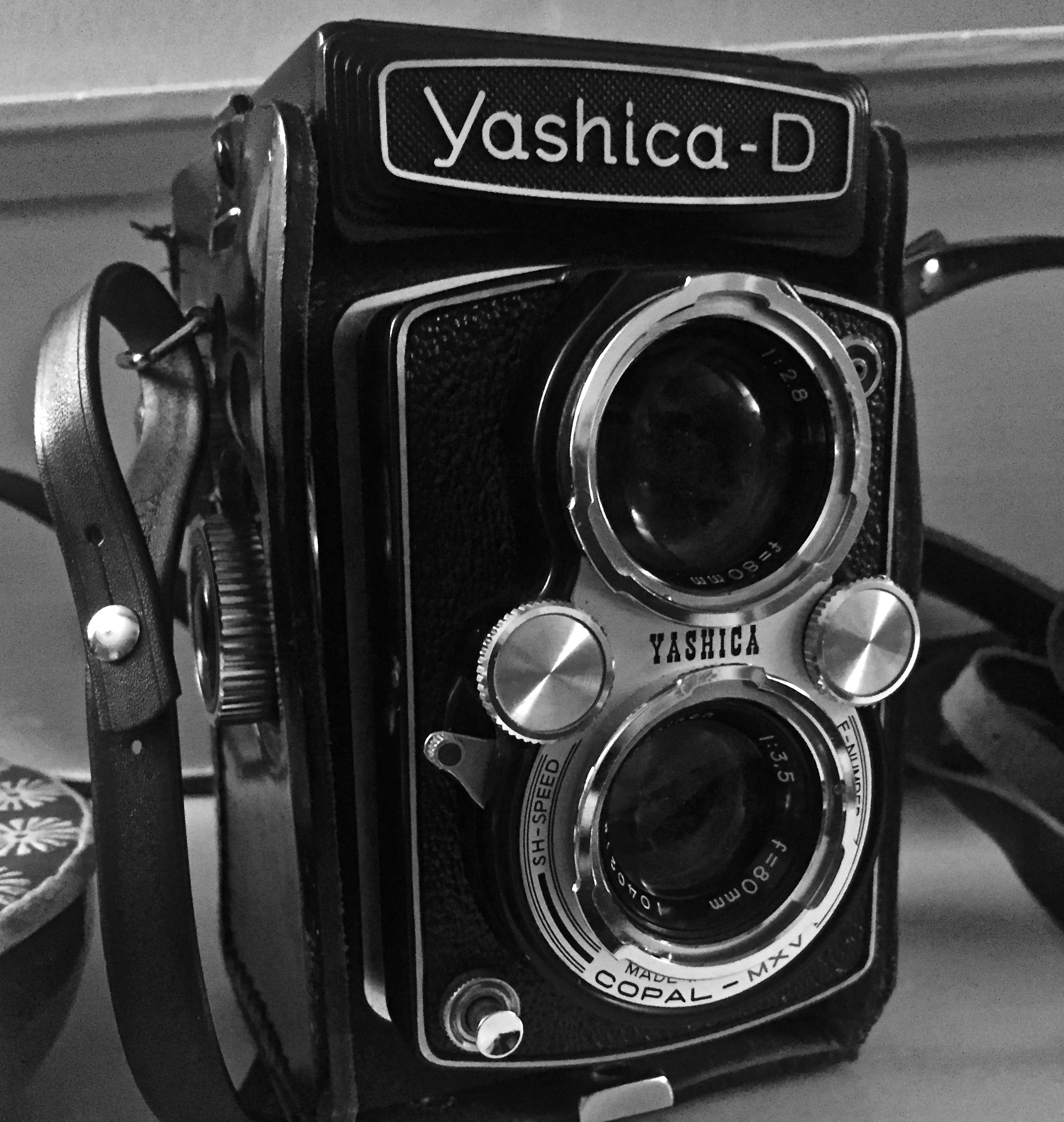
Found a 40 year old Yashica 6×6 format film camera ( a Japanese riff on the Rolliecord) in decent shape, shot 2 rolls of 120 color print film (Kodak Portra 400 and Ektar 100). See the accidental in camera double exposure…. focus, wind, snap… or was that snap, wind, focus… oops…
No meter, no safety interlocks, just you and the light.










 WTF is a Zorki?




 Analog Punk